From Automation to Autonomy: A CTO's Roadmap for Deploying Autonomous AI Agents
Automation and autonomy aren't the same thing. The distinction matters more than it sounds.
Automation is deterministic: a system executes a pre-defined workflow with pre-defined inputs and pre-defined decision points. If A, do B. If C, do D. Every outcome was imagined by a human in advance, written into rules, and tested.
Autonomy is generative: a system is given a goal and a set of tools, and it decides how to achieve the goal. The path isn't pre-defined. The decisions aren't pre-scripted. The system reasons, acts, observes, and adjusts — often in ways the original designer didn't anticipate.
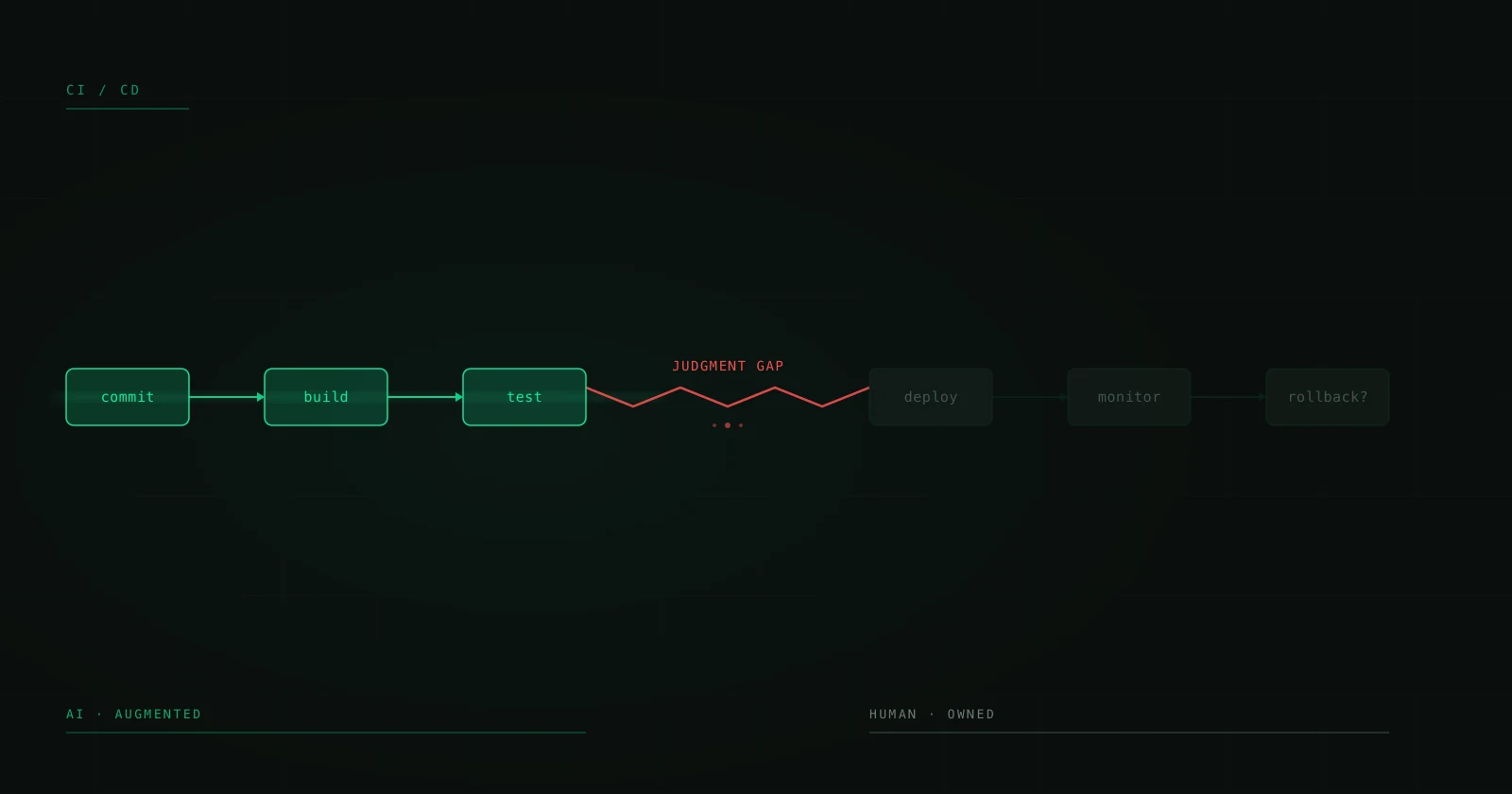
This difference changes everything about how you design, deploy, and govern the system. An automation framework that fails is usually a bug — the developer didn't handle a case. An autonomy framework that fails is a governance problem — the agent made a decision within its scope that had consequences nobody wanted.
2025 is the year when autonomous AI agents move from research demos to production deployments. By end of year, nearly half of all companies globally are expected to have AI technologies embedded in their processes, and a meaningful portion of that deployment is autonomous, not just automated. For CTOs, this creates a concrete question: how do you deploy autonomous agents safely, in ways that deliver real value without creating organizational risk?
This is the roadmap.
What Autonomous Agents Actually Do in 2025
Before the roadmap, a grounded view of the current state. The agents that are actually working in production in 2025 are typically doing things like:
- Customer support triage and resolution: reading incoming requests, querying systems, drafting responses, escalating when uncertain.
- Software development tasks: reading tickets, implementing changes, running tests, opening PRs, responding to review comments — with humans approving before merge.
- Data analysis and reporting: pulling data from multiple sources, running analysis, generating reports, flagging anomalies.
- Procurement and contract workflows: evaluating vendors against criteria, negotiating standard terms, executing within approved parameters.
- Content production: drafting, editing, translating, formatting — often with human review at key checkpoints.
- IT operations: diagnosing issues, executing standard remediation, escalating when unfamiliar patterns appear.
What's not yet working well in production:
- Strategic decisions with high stakes and novel contexts
- Multi-agent coordination at scale (still fragile in most real systems)
- Long-horizon tasks spanning days or weeks without human checkpoints
- High-precision actions with irreversible consequences (financial transactions beyond small amounts, sensitive communications, data deletion)
The roadmap should focus on what's actually working — expanding production-ready patterns — not on what looks promising in demos.
The Four Readiness Questions
Before deploying any autonomous agent, four readiness questions. If any answer is vague, you're not ready.
1. What specifically can this agent do and not do?
The most dangerous autonomous agents are the ones with undefined boundaries. An agent that "helps with customer support" is a blank check. An agent that "handles Tier-1 password reset requests for verified users, with escalation to human support for any deviation from the standard flow" is a scoped deployment.
The scope definition should answer:
- What tools can the agent call?
- What decisions can it make without human approval?
- What thresholds (dollar amounts, data volumes, severity levels) require escalation?
- What inputs trigger the agent vs. route to humans?
If you can't specify these, the agent isn't ready.
2. What happens when the agent is wrong?
Every autonomous agent will produce wrong outputs sometimes. The question is what happens when it does:
- Are the agent's actions reversible? (Sending an email isn't. Flagging an item for review is.)
- Can humans detect errors before they compound? (Logging, audit trails, review queues.)
- What's the damage if an error isn't caught? (Financial, reputational, compliance, operational.)
- What's the rollback path?
Deployment readiness scales with the agent's potential damage. An agent that reviews and summarizes internal documents is lower risk than one that sends customer-facing emails. Lower risk = faster deployment; higher risk = more guardrails before deployment.
3. How will the agent be observed?
Production agents need specialized observability:
- Decision traces: the reasoning chain for each decision, not just the output
- Tool call logs: what external systems were accessed, with what inputs, producing what outputs
- Latency and cost metrics: per-agent, per-task, per-user
- Quality signals: user feedback, downstream outcomes, detected errors
- Safety violations: attempts to exceed scope, policy violations, anomalous behavior
The observability should be available to humans who need to investigate specific incidents and to automated systems that aggregate patterns. "We'll add observability later" is how agents go into production and create incidents nobody can explain.
4. Who owns the agent's outcomes?
Every autonomous agent needs a human owner — not a committee. The owner:
- Monitors quality metrics
- Responds when the agent produces bad outputs
- Approves scope expansions
- Decommissions the agent when it's no longer working
- Is accountable for the agent's business impact
Without single-owner accountability, agents drift. Quality degrades. Nobody notices until an incident forces attention.
The Three-Phase Deployment Model
For each autonomous agent use case, the deployment should move through three phases. Skipping phases is the most common cause of production incidents.
Phase 1: Suggestion mode (weeks to months)
The agent produces outputs, but doesn't take actions. A human reviews every output and decides whether to act on it.
Purpose: build confidence in the agent's quality, identify failure modes, tune prompts and tools based on real data.
Exit criterion: the agent's suggestions are right often enough, and its errors are safe enough, that the review overhead is the main cost.
Phase 2: Supervised execution (months)
The agent takes actions autonomously, but humans review the actions after the fact. Low-risk actions may not be reviewed individually; high-risk actions are reviewed before they take effect (human-in-the-loop approval).
Purpose: validate that the agent performs correctly when taking real actions, refine the boundaries of what's autonomous vs. reviewed.
Exit criterion: the agent operates reliably within its scope; issues are rare enough to be handled as exceptions.
Phase 3: Autonomous operation (ongoing)
The agent operates without per-action human approval. Humans monitor aggregate metrics, investigate anomalies, and handle escalations.
Note: Phase 3 is not "no humans involved." It's "humans engaged at the supervisory level, not the operational level."
Governance Architecture
Production autonomous agents need a governance architecture that's more than a checklist. The components that matter:
Decision logs
Every agent decision — and the reasoning chain behind it — is logged. Not just "sent email to user X" but "based on ticket content Y and user history Z, agent concluded that standard response A was appropriate and sent it."
These logs serve three purposes: debugging (why did it do that?), auditing (regulatory requirements, customer requests), and improvement (patterns across decisions inform agent evolution).
Policy enforcement layer
Between the agent and its tools, a policy layer enforces what the agent is allowed to do. Even if the agent reasons itself into thinking an action is right, the policy layer rejects it if it violates defined rules.
Policies include:
- Scope constraints (agent can only access X systems)
- Threshold controls (agent can only commit to actions under $Y)
- Approval requirements (agent must escalate if Z condition is detected)
- Safety policies (agent must not take irreversible actions without human approval)
The policy layer is the difference between "the agent decided not to do bad things" and "the agent cannot do bad things." The second is what production systems need.
Evaluation pipeline
Continuously evaluate the agent on a representative set of scenarios. Quality degrades silently in production — if you're not actively measuring, you're not knowing.
The eval pipeline should include:
- Golden test cases (known-correct inputs and expected outputs)
- Adversarial inputs (scenarios designed to test edge cases)
- Production sample evaluation (human review of random production samples)
- Regression testing (every prompt or tool change runs against the eval set)
Kill switch
Production agents need a way to be disabled immediately when something goes wrong. Not "file a ticket to roll back." Literal kill switch — a button or API call that stops the agent from taking any further actions.
Test the kill switch regularly. The one time it's needed is not the time to discover it doesn't work.
Incident response
When an autonomous agent produces a bad outcome, there's an incident. Your incident response process needs to include:
- Agent-specific triage (was this the agent's fault or an external issue?)
- Root cause analysis (prompt issue? tool issue? model behavior? edge case?)
- Remediation (fix the issue, retrain, adjust policies)
- Communication (to affected users, to internal stakeholders)
- Post-mortem (what did we learn, how do we prevent recurrence)
The Organizational Shift
Deploying autonomous agents changes how engineering organizations are structured. The changes that matter:
New role: agent product manager. Someone who owns the agent's performance, scope, and evolution. This is a cross-functional role combining product sensibility, engineering literacy, and operational discipline.
New role: AI reliability engineer. Like a site reliability engineer but for agent systems. Focuses on observability, incident response, capacity, and continuous improvement of the agent stack.
Changed role: developer. Engineers shift from writing business logic to designing agent behaviors — prompt engineering, tool design, evaluation frameworks, guardrails.
Changed role: operations. Human operators who used to do the work directly now supervise agents doing the work. The skill set shifts from doing to monitoring, exception handling, and quality judgment.
Organizations that don't make these shifts tend to deploy agents that look promising in testing and fail in production because no one is accountable for them operationally.
The Infrastructure That Matters
The infrastructure stack for production autonomous agents in 2025:
- Agent runtime: orchestration layer that manages agent lifecycle, tool access, memory, and state.
- Tool catalog: centralized registry of tools the agent can access, with schemas, access controls, and usage tracking.
- Evaluation platform: systems that continuously evaluate agent outputs against golden sets and production samples.
- Observability layer: decision logs, tool call tracking, quality metrics, incident detection.
- Policy engine: enforcement layer that constrains what agents can do.
- Feedback system: mechanisms to collect human feedback on agent outputs and feed it back into improvement.
Emerging open-source and commercial tooling cover parts of this stack. Most organizations in 2025 are assembling their own from a mix of components. Expect this stack to consolidate into more integrated platforms over 2026–2027.
Where to Start
For CTOs who haven't deployed production autonomous agents yet, the starting pattern:
- Pick one use case that's bounded, measurable, and forgiving of errors. (Good examples: internal dev tool agents, support triage, document summarization.)
- Deploy in suggestion mode for at least 4–8 weeks before moving to execution. Measure quality rigorously.
- Build governance as you build the agent, not after. Decision logs, policy enforcement, kill switch, eval pipeline — all from day one.
- Name a single owner who's accountable for the agent's outcomes.
- Measure business impact honestly. If the agent isn't delivering measurable value in the target outcome, iterate or retire.
Avoid:
- Starting with high-stakes autonomous deployment before you have operational experience
- Scaling to multiple agents before the first one is working reliably
- Treating governance as bureaucratic overhead rather than technical design
The Competitive Dynamic
The urgency isn't that autonomous agents are the future — it's that competitive pressure is already forming. Companies that build operational capability with agents in 2025 are compounding advantages through 2026 and beyond. The learning curve on agent operations is steep; the organizations that start now will have gotten through it when competitors are just beginning.
This is a common pattern with platform shifts: early movers don't win because they were first, they win because they built operational muscle while others waited for the tech to stabilize.
Building your first autonomous agent but missing the team shape to execute governance and operations? Talk to a CTO about structuring a nearshore squad with AI engineering, agent ops, and reliability expertise.